
Deworming
Puppies are normally dewormed by the veterinarian, even if they are not showing signs of being infected.
Puppies are small and cannot afford to be infected or lose nutrients that their tiny growing bodies require. They can become extremely ill much quicker than an adult dog and as a result they are vulnerable to becoming dehydrated; losing important electrolytes; or ending up with anemia from blood loss. Puppies are also more prone to ending up with secondary intestinal infections.
Therefore, puppies are dewormed several times.
The Center for Disease Control and Prevention recommends deworming of all puppies at: 2, 4, 6 and 8 weeks of age, however, we do not usually see puppies so young in practice, so they will normally be dewormed with each puppy vaccine visit and, depending on the season, can be given parasite prevention on a monthly basis thereafter.
Even if your young puppy has been raised mainly indoors, deworming is an optimal choice as there are many different routes of infection including through the nursing mother.

Parasite and Heartworm prevention
The monthly prevention products mentioned above come in two forms, either an oral (chewable treat flavored tablet) or topical (drops for the skin). Many of these parasite products prevent heartworm disease as well, which is a disease carried by mosquitos and can be transmitted when your dog is bitten. Heartworm is a very serious disease that can be fatal and is best prevented, as treatment can be both uncomfortable for the dog and expensive for the owner.
Heartworm and parasite prevention medication is normally started in the spring, when mosquitos and worms come out, and is given once every month until the fall. Tick products may need to be administered for a longer duration as ticks may be active anytime the temperature is above 50C.
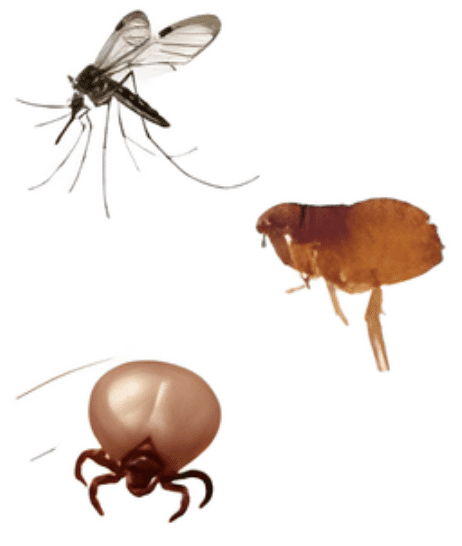
Tests for heartworm and tick-borne diseases after a season of exposure to mosquitos and ticks is recommended because giving heartworm-prevention products to a heartworm-positive dog can lead to anaphylaxis. Also, Lyme disease does not manifest itself until months after exposure to a Lyme-positive tick.