

When a kitten is first born, its immune system is not fully mature yet. It is very easy for a kitten to become infected with a variety of illnesses. The mother offers them some protection initially by nursing and offering maternal antibodies, and this will initially help with the kitten’s immunity. How long this maternal antibody lasts in any given kitten depends completely on the individual. These antibodies against various diseases/infections wear off at different times and then the maternal antibodies are completely gone and the kitten must rely on its own immune system. This is where vaccines come into play!
Feline “Core” Vaccines[1]
Kittens receive a series of three sets of “FVRCP[2]” vaccines starting around 6-8 weeks of age. Each set of vaccines is given 3-4 weeks apart (6-8 weeks old, 10-12 weeks old, 14-16 weeks old). The FVRCP vaccine is considered a core vaccine and covers three viral diseases spread through cats: rhinotracheitis, calicivirus and panleukopenia. These diseases are airborne, so every cat needs to be vaccinated against them.
Your kitten will also need to receive a Rabies vaccine around 16 weeks of age. This vaccine is a requirement under public health bylaws. The FVRCP and Rabies vaccines are considered “core vaccines1”, therefore all cats (yes, even indoor cats!) should still receive these two vaccines.
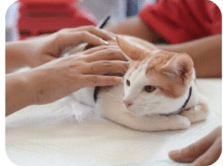
If the vaccines are not given in kittenhood and in a series, we could leave these little guys quite vulnerable. It is best to wait to introduce your kitten to other cats until they’ve completed all their boosters, unless you know and trust the cats to be fully vaccinated. Cats may require additional vaccines depending on their lifestyle!
Feline Leukemia Virus (FeLV) Vaccine Leukemia vaccine is considered an “optional” vaccine because not all cats may need it. Feline leukemia virus is a common infection in cats that is primarily transmitted through close, social contact, such as exchange of saliva. Routine testing (called the FeLV/FIV blood test), as well as vaccination of cats determined to be at risk (i.e. cats who are in contact with other cats), are key factors in FeLV prevention. Kittens that receive this vaccine for the first time will need to booster it in 4 weeks.
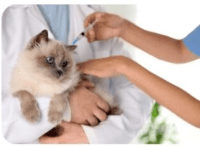
[1] Core vaccines for cat are those that are strongly recommended to be administered to ALL cats-even for cats that don’t go outside. The FVRCP vaccine is one of two core cat vaccines-the other being the Rabies vaccine.
[2] The FVRCP vaccination is an important part of your cat’s routine. It prevents three potentially deadly airborne viruses: rhinotracheitis, calicivirus and panleukopenia.
